
Start with the buyer journey
A search-to-RFQ pathway starts when a buyer searches for a process, material, supplier type or component need. The page they land on must answer the question behind that search.
The pathway continues through technical proof, RFQ action, internal review and follow-up.
Create useful landing pages
Landing pages should match buyer intent. A material page, process page and sector page can each play a different role if the content is specific and technically accurate.
Useful pages help buyers decide whether your shop is worth contacting.
Connect pages to RFQ forms
Every important capability page should have a clear RFQ path. The form should collect enough information for the team to understand the request without making the buyer work too hard.
Source tracking helps identify which pages and topics create better-fit enquiries.
Report on the full path
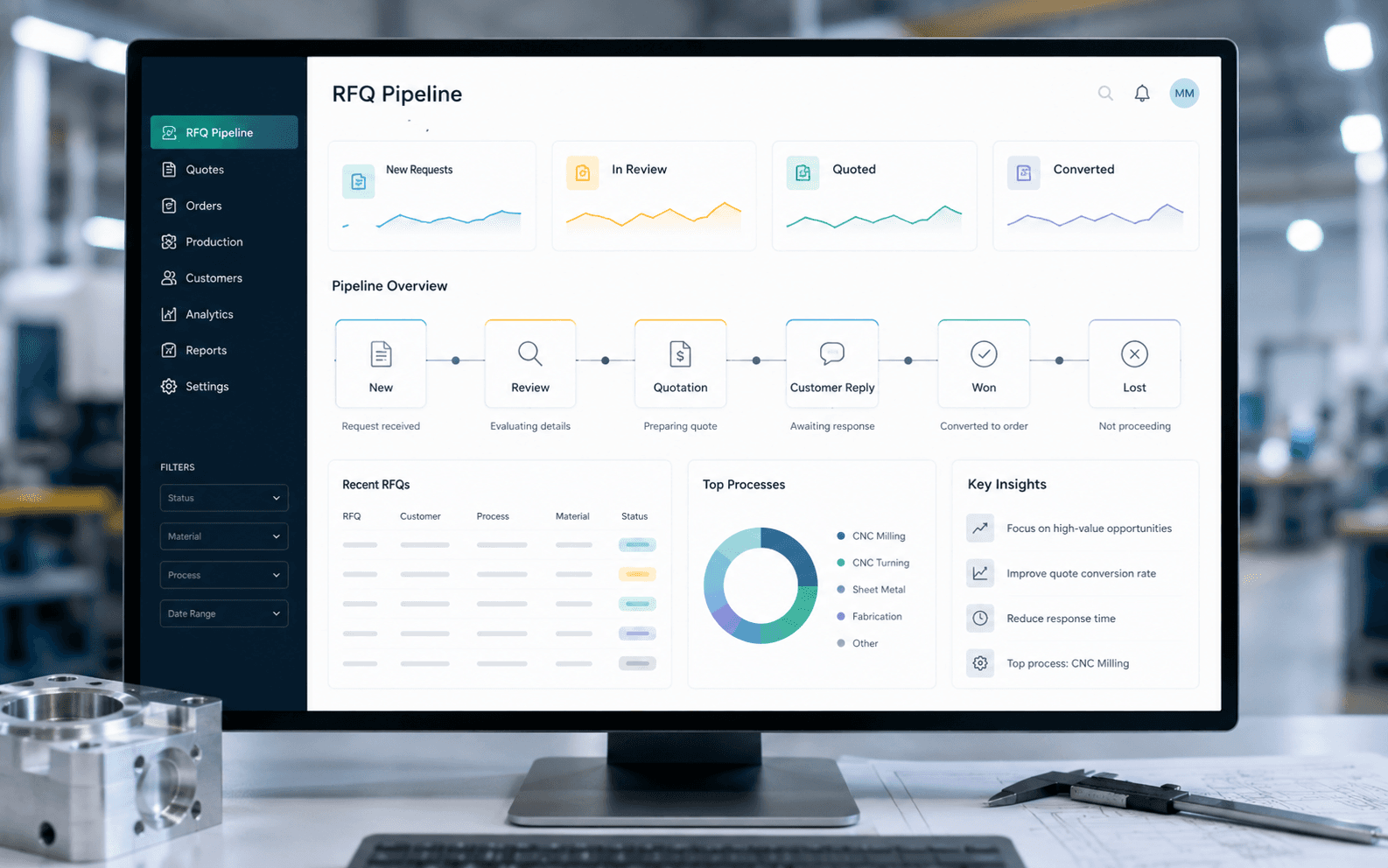
Reporting should connect visibility, page engagement, RFQ submission and enquiry quality. That gives the manufacturer a clearer view of what is working and what needs improvement.
The best improvements usually come from tightening the whole pathway, not just redesigning one page.
Practical checklist
- Map buyer search intent.
- Build process, material and sector pages.
- Add technical proof and trust signals.
- Connect pages to RFQ forms.
- Track source and enquiry quality.
Common mistakes
- Treating SEO and RFQ forms as separate projects.
- Measuring traffic without enquiry fit.
- Letting strong pages end in vague contact CTAs.
- Failing to review follow-up workflow.
Takeaway
A search-to-RFQ pathway turns isolated marketing tasks into a measurable commercial system.
Map your pathway
NeuraRank can help map the current route from search visibility to RFQ review and identify the highest-friction points.